


The Logic Behind Iraq’s Militia Strike Campaign
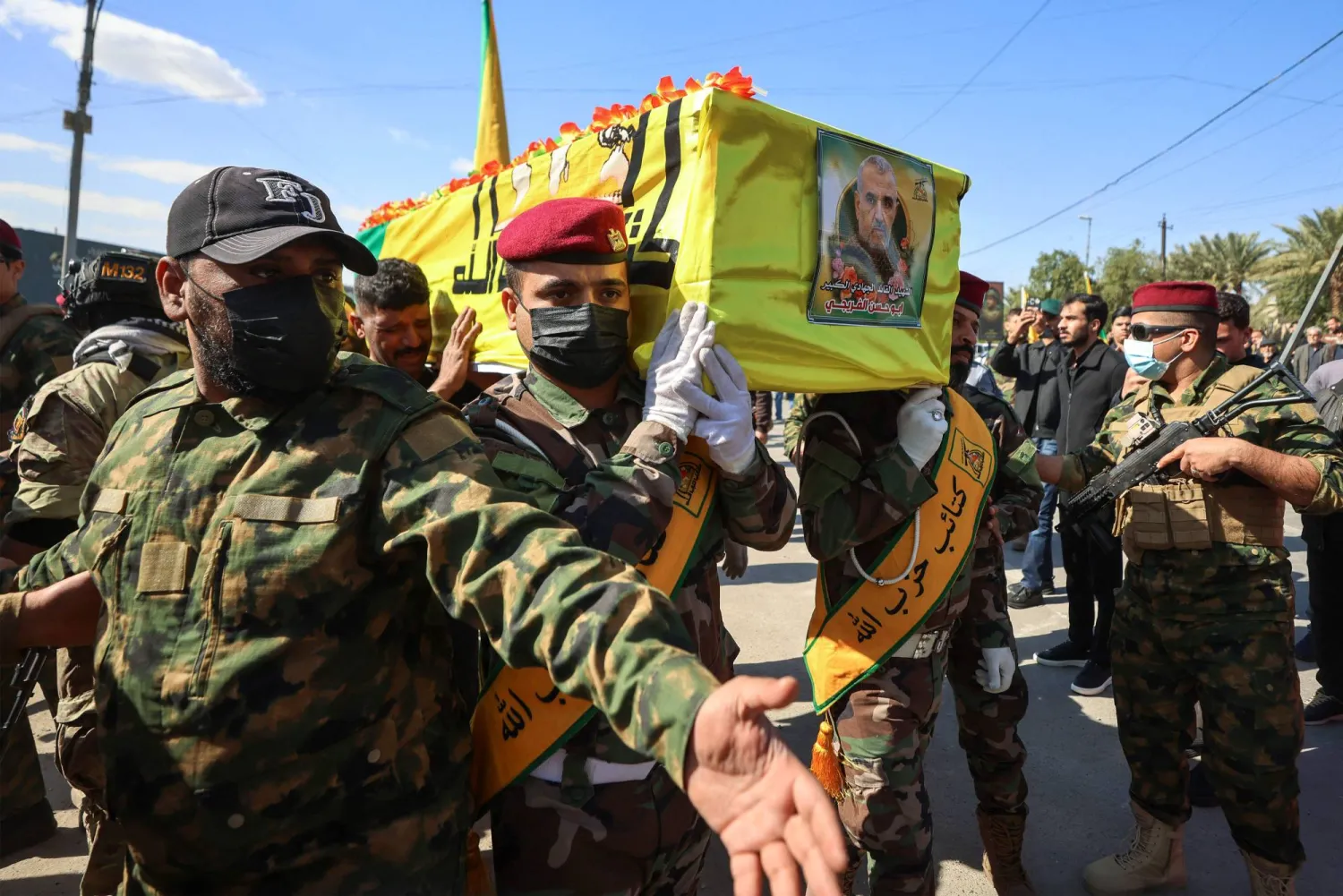
Since 28 February 2026, US and Israeli airstrikes have hit positions belonging to at least fifteen PMF-affiliated militias across seven Iraqi governorates, from the Syrian border to the Nineveh Plain. The strikes have killed dozens, destroyed ammunition warehouses and communications facilities, and hit groups as different as Kataib Hezbollah, the IRGC’s closest Iraqi instrument, and Hashd al-Shabak, a Shabak village militia rooted in the Nineveh Plain.
At first glance, the breadth of the campaign can make the target set look uneven or hard to read. But the pattern is more coherent than it first appears. The strikes become much easier to understand once they are read through three overlapping lenses: proximity to the IRGC, operational hostility toward US and KRG interests, and the geography in which these militias operate.
The first lens is proximity to Iran’s command structure. The southern Shia factions taking the heaviest and most geographically dispersed strikes are not necessarily the largest or most politically powerful PMF groups. They are the ones most operationally tied to Iranian command structures in the current war. Kataib Hezbollah has been struck in ten locations across five governorates. Badr, the most powerful armed-political movement in the Hashd, has barely been touched.
The second lens is operational hostility. The local minority militias in the disputed territories, especially Shabak and Turkmen formations, are real components of the Iranian-aligned PMF network. But that alone does not explain how heavily they have been hit. These groups have also been among the most active in launching drone and rocket attacks against the Kurdistan Region, including attacks on US military facilities and on Iranian Kurdish opposition groups based in the Kurdistan Region.
The third lens is geography. Almost every strike has fallen in Iraq’s northern half, above the Baghdad line, but the social and political character of the strike zones varies sharply. In Anbar, southern Shia formations are being hit at exposed border positions in entirely Sunni territory and are suffering the campaign’s heaviest losses. In Nineveh, local Shabak formations are being struck in their own villages, but with far lighter casualties, in part because they can disperse into the communities they come from. In Kirkuk and Tuz Khurmatu, local Turkmen formations are being hit alongside southern militias in the same coordinated waves. By contrast, the seven Shia-majority governorates south of Baghdad, where the main militias recruit and where their families live, have not been struck at all.
Taken together, these three lenses explain much of the campaign’s internal logic and most of the variation in who is being hit, where, and how hard
Context: The strike data, mapped separately, covers more than 70 distinct incidents across Anbar, Nineveh, Kirkuk, Salah al-Din, Baghdad, Diyala, Babil, and Wasit. Three groups account for the bulk of the target sites: Kataib Hezbollah and its linked formations (around 20 strike events), Hashd al-Shabak on the Nineveh Plain (ten), and Kataib Imam Ali in Nineveh and Kirkuk (six). Behind them, Ansar Allah al-Awfiya, Asaib Ahl al-Haq, Saraya Talia al-Khorasani, and Kataib Sayyid al-Shuhada have each absorbed four to five strikes. The Badr Organization has been hit three times. Harakat Hezbollah al-Nujaba, one of the two militias closest to the IRGC by any measure, has been struck only twice. Nine smaller formations, from the Turkmen brigades to Kataib Babiliyoun to the Tribal PMF, were hit once or twice each. Seven strike sites could not be attributed to any single militia. The seven Shia-majority governorates south of Baghdad, Basra, Maysan, Dhi Qar, Muthanna, Najaf, Karbala, and Qadisiyyah, where these militias recruit and where their families live, have not been struck at all.
The most revealing feature of the data is the gap between strike counts and death tolls. Ansar Allah al-Awfiya suffered four strike events in western Anbar and lost more than 26 dead. Hashd al-Shabak suffered ten strikes across the Nineveh Plain and lost one. The explanation is not targeting intent. It is terrain and social geography. The southern Shia formations deployed to the Anbar desert are manning checkpoints and border posts in flat, uninhabited territory with no civilian population to disperse into. When those positions are struck, everyone present is caught. Ansar Allah al-Awfiya lost more than 20 in a single cluster at al-Qaim. Kataib Hezbollah’s Brigade 45 lost 4 killed and 11 wounded at Akashat. Saraya Talia al-Khorasani lost 2 killed when its 2nd Battalion was hit at al-Qaim. The Shabak formations on the Nineveh Plain, by contrast, are operating in and around their own villages. Their fighters live locally, their families are present, and they can evacuate or simply go home. The result is that the Anbar strikes are killing fighters while the Nineveh strikes are destroying warehouses, communications buildings, and stored materiel. In the Kirkuk and Tuz Khurmatu corridor the picture is intermediate: local Turkmen formations can embed in their communities, but the southern formations co-located with them cannot, and the 18 March coordinated waves struck both in the same pass. The campaign’s lethality concentrates where southern Shia formations are most exposed and most removed from any population base. It is least lethal where local minority formations can dissolve into their own communities.
The 18 to 19 March coordinated waves represent an escalatory shift. The earlier pattern was sequential and geographically clustered. The late-campaign strikes hit multiple militias simultaneously across Kirkuk, Daquq, Tuz Khurmatu, Baiji, and the Nineveh Plain, reaching formations that had been untouched in the first two weeks.
Analysis: The IRGC proximity thesis. For the southern Shia militias, the targeting hierarchy tracks current operational ties to the IRGC rather than PMF size, political weight, or the number of fighters a group can field. When each militia is assessed against a single metric, current reporting-line dependence on Iranian officers, the correlation with strike intensity becomes clear. Kataib Hezbollah and Harakat Hezbollah al-Nujaba sit at the top of that scale. The Washington Institute describes Kataib Hezbollah as operating under direct IRGC-QF command. Nujaba’s Syria wing operates under direct IRGC operational and administrative control, and the group is subordinate to and partly financed by the Quds Force more broadly. Below them, Kataib Sayyid al-Shuhada sits just under the top tier: it emerged from Kataib Hezbollah and its Syria members operated within the IRGC chain of command, but the evidence for whole-organisation subordination is thinner. Saraya Talia al-Khorasani was established with extensive IRGC-QF involvement and Ansar Allah al-Awfiya has provided what the Washington Institute calls “unstinting service” to the IRGC-QF, but neither occupies the innermost command tier. Badr and Asaib Ahl al-Haq sit lower than older shorthand often suggests. Badr remains deeply tied to Tehran, but Hadi al-Amiri has built it into a political organisation with parliamentary seats and governorate-level power that functions more as an allied centre of gravity than a subordinated field arm. AAH was created with IRGC and Lebanese Hezbollah support, but the Washington Institute explicitly notes that it “stubbornly maintains a degree of independence.” Kataib Imam Ali is close to Iran and Lebanese Hezbollah, with its leader Shibl al-Zaydi sanctioned for coordinating between the IRGC and Iraqi factions, but the relationship looks more like a trusted liaison than routine subordination. Kataib Hezbollah at the top of this scale is the most struck militia by every measure: frequency, geographic breadth, cumulative toll. The Tribal PMF at the bottom has been barely touched. The correlation holds. The most instructive outlier is Nujaba. It matches Kataib Hezbollah’s position at the top of the proximity scale but has been struck only twice. The most likely explanation is physical exposure: Nujaba’s operational posture appears more dispersed and less infrastructure-heavy than Kataib Hezbollah’s, without the same fixed border positions in western Anbar or static checkpoints on the Nineveh Plain. This suggests that IRGC proximity determines who is on the target list, but that physical exposure determines who absorbs sustained bombardment. The pattern in what the campaign has avoided is also significant. Badr and the Sadrists have been largely spared. This suggests, though does not prove, that Washington and Tel Aviv may be treating them as powerful Iraqi actors inside Iran’s camp rather than as instruments that need to be degraded to disrupt IRGC command-and-control in the current war. The 18 to 19 March waves, which stretched into Badr-adjacent targets in Kirkuk, may indicate that this distinction is already under strain.
The Kurdistan dimension. IRGC proximity does not fully account for why Hashd al-Shabak, a group with real but mediated Iranian ties, is the second most targeted formation in the campaign. A second dynamic is at work. Hashd al-Shabak is a Badr-linked Shabak auxiliary that operates within the IRGC-influenced PMF architecture. The Turkmen formations, Quwat al-Turkmen and Fawj Amerli, are Shia Turkmen community militias with their own Iranian linkages. These groups are genuine parts of the Iranian-aligned ecosystem. But they have also been among the most active in launching drone and rocket attacks against the Kurdistan Region in the period surrounding the war on Iran, hitting US military facilities, coalition positions, and Iranian Kurdish opposition groups based in the KRI, including factions such as the KDPI and Komala. Their heavy targeting reflects both dimensions. The Iranian connection places them on the target list in the context of a war on Iran. The attacks on the Kurdistan Region make them operationally urgent. The two compound each other. There is a further layer. The Shabak and Turkmen communities sit in the disputed territories between Erbil and Baghdad, the belt of land that both the federal government and the Kurdistan Regional Government claim under Article 140 of the constitution. The PMF formations drawn from these communities are part of the Iranian network, but they are also vehicles of local ethnic and political assertion in a territorial dispute that has been unresolved since 2003. Attacks on the Kurdistan Region serve Tehran, but they also weaken Kurdish control over disputed territory, consolidate minority positions within the federal orbit, challenge the KRG’s security perimeter, and assert PMF primacy over the Peshmerga in areas where both operate. The IRGC relationship provides weapons, intelligence, and political cover. Local dynamics in the disputed territories provide motivation that does not require instructions from Tehran. The campaign’s degradation of Hashd al-Shabak’s ammunition warehouses at al-Mowafaqiya, communications infrastructure at Bartella, and regimental positions at Khazna Taba constrains both dimensions simultaneously: it degrades the group’s capacity to launch further drone attacks against the KRI and it dismantles Iranian-linked infrastructure across the Nineveh Plain.
The geography of the northern half. Almost every strike in the campaign has fallen above the Baghdad line, and the five theatres in which they have fallen serve different strategic purposes. The western Anbar corridor, al-Qaim, Akashat, Akkaz, Fallujah, the Iraq-Syria border, is the cleanest and the most lethal. This is the land bridge through which Iranian materiel has moved into Syria and onward toward Lebanon for years, manned by Kataib Hezbollah, Saraya Talia al-Khorasani, and Ansar Allah al-Awfiya, all southern formations deployed to border positions in entirely Sunni Arab territory with no local Shia population. Cutting that supply artery is a strategic objective in the context of a war on Iran independent of which militia is sitting on it. The Nineveh Plain is where both targeting logics operate simultaneously. Hashd al-Shabak is being struck across the Shabak villages of Bartella, Khazna Taba, al-Mowafaqiya, Khorsibat, and Ain al-Safra, community formations hit in their own homes for their Iranian ties and their attacks on the Kurdistan Region. Alongside them, southern formations are deployed across the plain: Kataib Sayyid al-Shuhada at al-Rashidiya and Bartella, Kataib Imam Ali at Qayyarah, Waad Allah at Hammam al-Alil, and the PMF Nineveh Operations Command north of Mosul. For these groups, the IRGC proximity thesis applies directly. The Nineveh Plain is where local and deployed formations sit side by side in the same strike zones, targeted for overlapping but distinct reasons. The Kirkuk and Tuz Khurmatu corridor is the most ethnically contested and analytically difficult geography. At Taza Khurmatu, Quwat al-Turkmen is a local community militia. At Tuz Khurmatu, Fawj Amerli is a Turkmen formation born from the 2014 Amerli siege. These are locals with their own stakes in the disputed territories and their own history of attacks against the Kurdistan Region. But the same locations host Kataib Hezbollah-linked sites, AAH deployments, and formations directed from outside the area. The 18 March coordinated waves struck all of them in the same pass without sorting locals from outsiders. Baghdad is a different theatre entirely: the vehicle strikes against the Kataib Hezbollah commander Ali Hassan al-Furaiji on 4 March and at Nahrawan on 14 March, the faction house in al-Arsat, the Jadriyah headquarters house, Camp Saqr in Abu Dshir. These are targeted killings and leadership disruption. Baghdad is where command sits, and the campaign treats it as a decapitation theatre. The boundary zones of Jurf al-Sakhar in Babil, a town that was Sunni Arab before Kataib Hezbollah expelled its population, and Muqdadiya in Diyala, on the Sunni-Shia demographic fault line, sit between the northern theatres and the untouched south. South of Baghdad, the seven Shia-majority governorates have not been struck at all. The absence suggests the campaign is calibrated to concentrate on forward positions and disputed territory where the political cost is lower, while avoiding the Shia heartland where strikes would most directly provoke a unified backlash from Baghdad. The concentration above the Baghdad line is not incidental. The western Anbar corridor is the Iranian supply line to Syria. The Nineveh Plain is where PMF factions control checkpoints, revenue, and territory in the disputed areas between Erbil and Baghdad. Kirkuk is the most contested real estate in Iraq. The campaign is contesting the territorial infrastructure through which Iran projects influence across northern Iraq and westward into Syria, while simultaneously degrading the capacity of local formations to attack the Kurdistan Region.
The question is whether the calibration holds. The 18 to 19 March coordinated waves hit more militias, in more locations, simultaneously, than anything in the first two weeks. The target set is expanding and the tempo is increasing. If the distinction between core IRGC proxies, operationally hostile local formations, and politically connected PMF factions breaks down, the logic of the campaign changes, and so does the political equation in Baghdad.


