


Turkey’s Legal Reforms Due by Late February as PKK Gara–Hakurk Pullout Is Expected to Follow
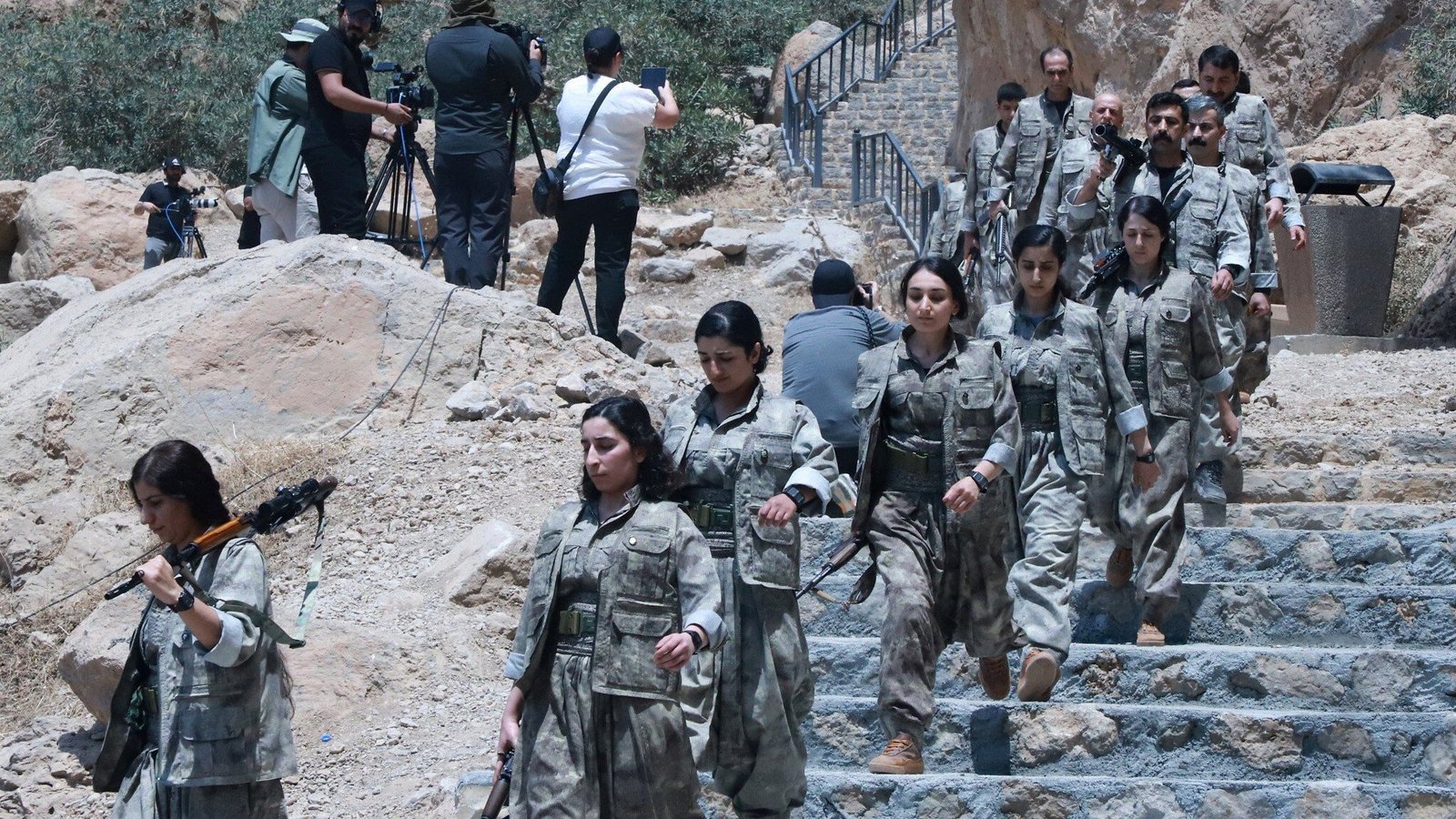
The Turkish parliament’s peace commission has extended its work through the end of February—aimed at advancing legal reforms—amid Turkish media reporting that a PKK evacuation from the Gara and Hakurk (Khuwark) mountains is expected to be completed by late February or in early March.
Context: The commission—formed in late July to draft and coordinate legal reforms tied to the peace track with the PKK—was initially expected to conclude by the end of the year. Instead, its mandate is now extended to run through the end of February as parliament prepares to debate and pass legislation intended to establish a legal framework for PKK militants and political prisoners. Turkish media had previously reported that the PKK withdrew from six key cave sites in the Zap and Metina areas of Amedi district in the Kurdistan Region. What is new in the latest reporting is the claim that Zap and Metina as a whole have now been vacated, enabling clearance operations led by Turkish military and intelligence. Two pro-government outlets—Sabah and Türkiye—now say preparations have also begun for a PKK pullout from Gara and Hakurk, with completion framed as end-February or March.
Analysis: If the reported timeline for evacuations from Gara and Hakurk is accurate, it implies that the contours of the legal framework are already being locked in—and that key legislation is likely to move before the end of February. Earlier withdrawals—from within Turkey and then from PKK positions in border-adjacent areas of the Kurdistan Region, understood in reporting to mean Zap and Metina—were framed as necessary to reduce the risk of clashes given their proximity to Turkish bases. Gara is different—it is comparatively farther from Turkish outposts, and it functions as the PKK’s logistical hub in the Kurdistan Region. A withdrawal from Gara would therefore suggest disarmament is being embedded structurally, because Gara is the node linking the organisation’s main operating zones across the region.

This reading sits uneasily alongside recent public messaging from PKK figures. Amed Malazgirt, a senior PKK official, told AP that the group has already carried out the steps initiated by Ocalan and that “no further actions” would be taken unless Turkey takes steps—starting with Ocalan’s release. Yet the domestic track appears to be moving regardless behind closed doors—Turkey’s pro-Kurdish DEM Party met yesterday with the justice minister and the parliament speaker and said it observed “extensive preparations” by the justice ministry for legal reforms expected to move in parliament in January.
The Syria track, by contrast, appears slower—despite Ankara presenting it as part of a broader package aimed at dismantling PKK-linked structures. That divergence suggests the two files have likely been separated and through different channels. Still, given the opacity around the process, the full picture—and the real sequencing between legislation and on-the-ground withdrawals—remains unclear.


