


Turkey Confirms PKK Pullback From Six Zap and Metina Caves, With Hakurk, Gara and Haftanin Next
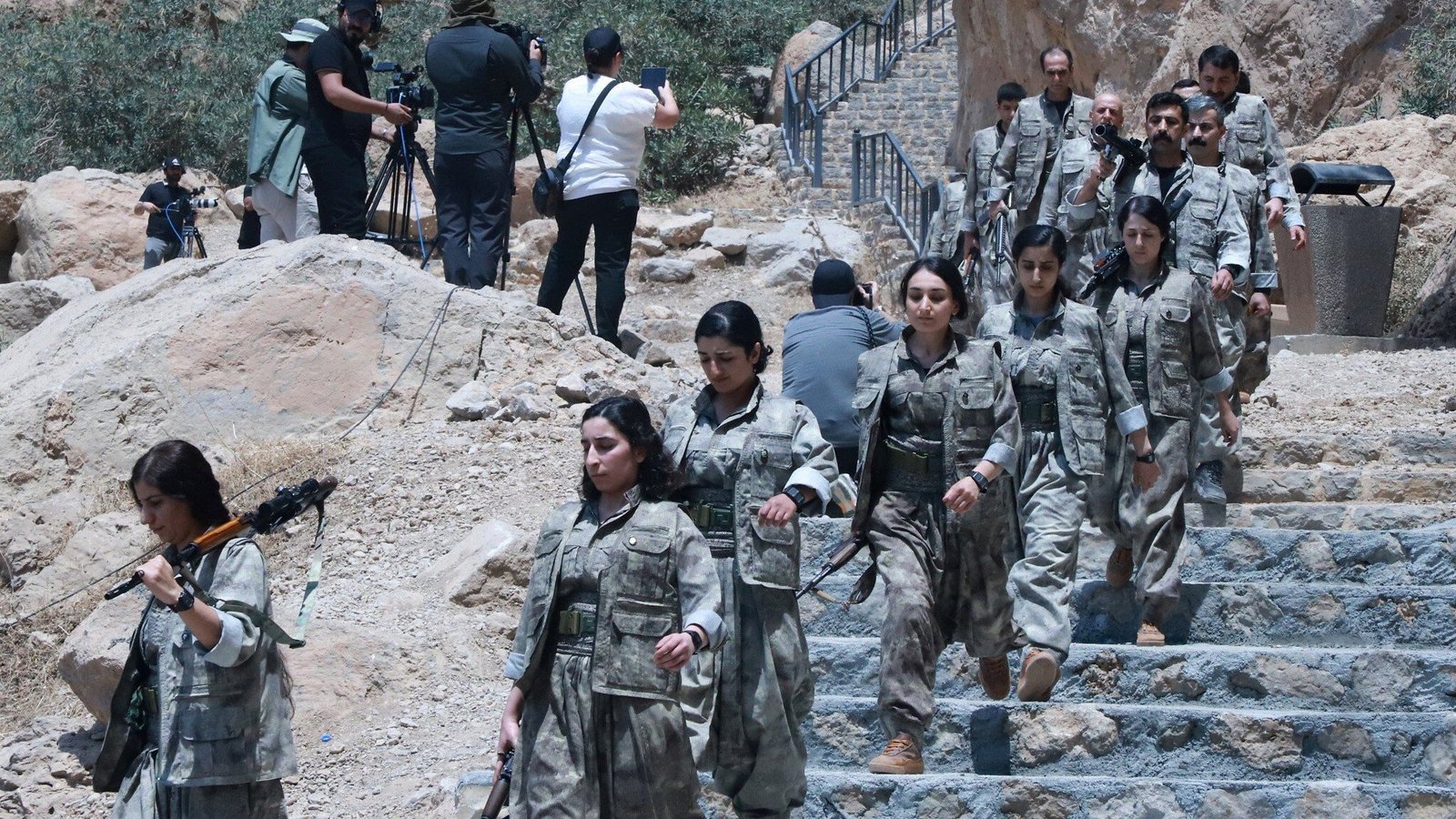
The Turkish intelligence services and military have confirmed that the PKK has withdrawn from six key caves in the Zap and Metina areas in Amedi district of the Kurdistan Region, which had been the site of the fiercest PKK–Turkish army clashes from 2021 until the beginning of the peace process last year. “The PKK has emptied a total of six caves in Zap and Metina and destroyed the ammunition,” a Turkish security source told the pro-government Türkiye newspaper.
Context: The PKK had already announced that, as of 16 November 2025, it had relocated its forces in the Zap area, following its full withdrawal from Turkey, which posed a risk of clashes because of their proximity to Turkish bases in the region. As part of the peace process, in which the PKK has declared it is laying down arms following a call from its jailed leader Abdullah Ocalan, the Turkish military and intelligence have jointly created “verification mechanisms” to monitor implementation.
According to Türkiye, these mechanisms confirmed that the six positions in Zap and Metina had been completely vacated, that the ammunition was logged and then destroyed, and that field sweeps “determined that no heavy weapons were present in the locations that had been emptied.”
Analysis: The Turkish newspaper’s report that “the ammunition was recorded and then destroyed” and that “no heavy weapons were found” at the emptied positions is a significant development. These areas have seen some of the most intense clashes in recent years, and the PKK has been entrenched there for decades, only in recent years building sophisticated infrastructure inside some of these caves. Their evacuation suggests the peace process is advancing in a tangible way and indicates a degree of confidence by Ocalan in the current track.

Equally important is the claim that this is only the first phase of withdrawals from inside the Kurdistan Region, with “preparations underway for the evacuation of Hakurk, Gare and Haftanin.” If implemented, this would be even more consequential. Hakurk (also referred to as Khwakurk) is the broad mountainous district of northeast Erbil province, a strategic junction linking Iraq, Turkey and Iran and connecting further south to the Qandil mountains. Haftanin is the mountainous area of Zakho district in northern Duhok, sitting on the Iraq–Turkey–Syria triangle. Gara is effectively the PKK’s logistical hub in the Kurdistan Region; a withdrawal there would suggest that disarmament is being locked in structurally, because Gara is the node that connects the organisation’s main operational zones inside the Kurdistan Region.
However, the verification process also raises a key question: while the Turkish military and intelligence are inspecting these zones, will they remain and establish permanent positions in these newly vacated areas? This is particularly sensitive in the case of Gara, which lies deeper inside the Kurdistan Region and, unlike the other areas mentioned, currently has no permanent Turkish military presence.
The next step, according to the report, is expected “along the Sinjar–Makhmour corridor,” where residents of the Makhmour refugee camp are to be provided with identity documents and allowed to return to Turkey once a new legal package is passed in parliament, reportedly expected in the coming weeks before the new year.
On the Qandil mountains, where the senior PKK leadership is based, the report suggests this will be addressed at the final stage, describing Qandil as the “less problematic area.” Once a legal and political framework is agreed for the leadership — whether they are relocated to a third country, remain in the Kurdistan Region, or return to Turkey — that phase would mark the formal endgame. The article, citing a security source, also claims that “roughly 30 percent of the organisation is resisting giving up arms.” But given that the PKK is already vacating key sites that make armed struggle operationally viable, the size of this residual faction — and how serious its resistance is — may ultimately prove less decisive than the structural dismantling of its infrastructure now underway.


