


Why the Lajan–Lanaz Protests Matter: Refinery, Tribe and Power in Kurdistan’s KDP Heartland
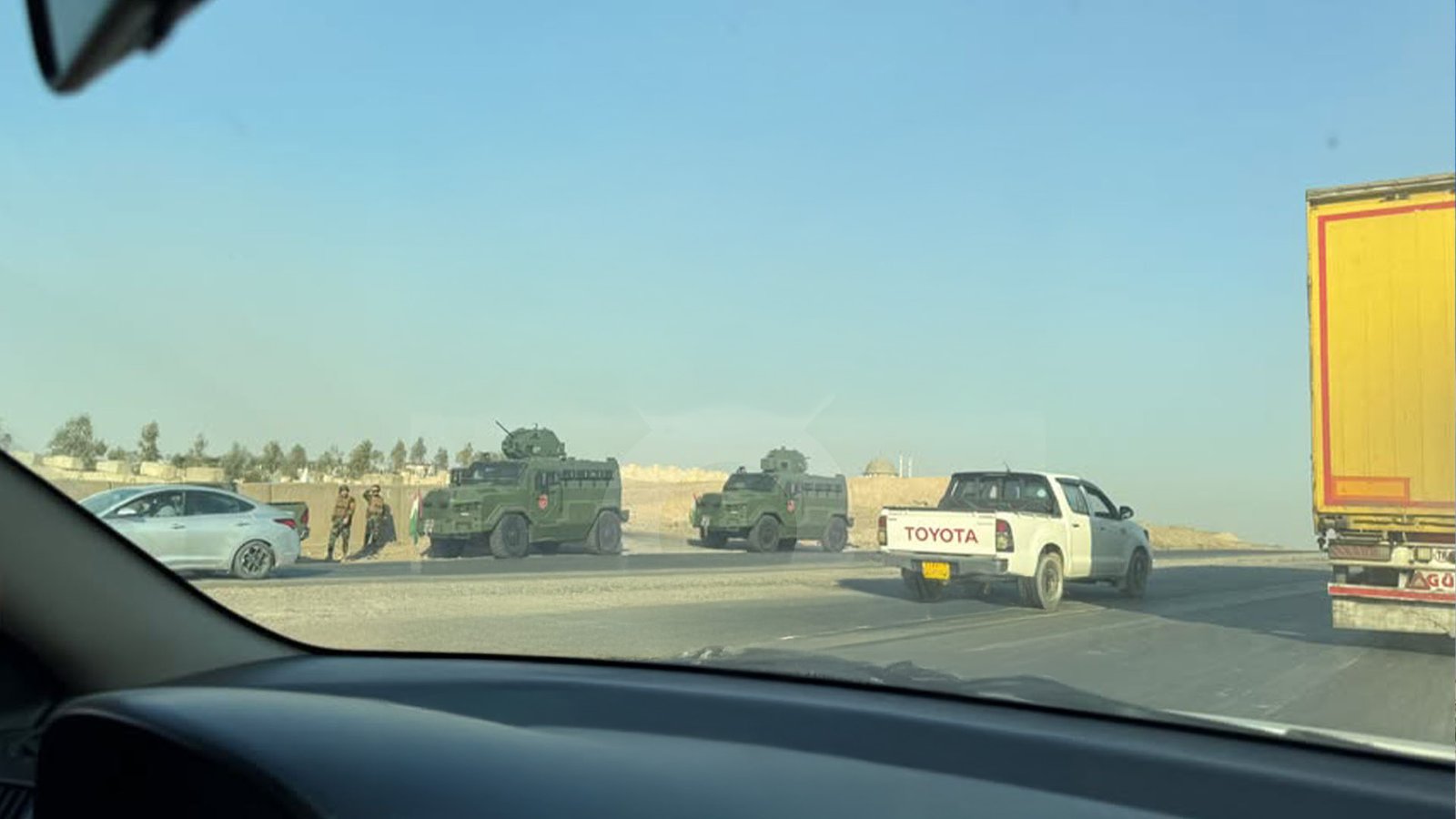
In recent days, a small village west of Erbil has turned into one of the most sensitive flashpoints in the Kurdistan Region. Protests by residents of Lajan, a Harki tribal village in Gwer district that hosts the Barzani-linked Lanaz refinery, have left at least two people dead, more than a dozen injured, and triggered a harsh security lockdown and information blackout.
What began as a local dispute over jobs and pollution has then spilled into neighbouring parts of Khabat district, with Harki protesters blocking key highways and tribal leaders calling on Baghdad to intervene. For the Kurdistan Democratic Party (KDP), this is no longer only about one village. It touches on land, the Barzani family’s economic interests, an old tribal blood feud and the party’s grip on its own heartland.
This explainer unpacks the layers behind the Lajan–Lanaz crisis and the wider Harki–Barzani tension.
What happened in Lajan?
Lajan is a village in Gwer district, west of Erbil, whose residents are from the Harki tribe. The Lanaz refinery was first built in 2008 as a relatively small plant on the edge of the village. It was then significantly expanded in the early 2020s, to the point that by 2025 its perimeter almost touches people’s homes.
Lanaz is widely seen as a Barzani family asset. According to local and industry sources, 51 percent of the refinery is owned by Masrour Barzani, KDP president Masoud Barzani’s son, while the remaining 49 percent is reportedly held by a group of Turkish investors. For residents, this ownership structure reinforces the sense that they are living in the shadow of an elite project over which they have no say.
For more than a year, villagers have been protesting intermittently. They say the refinery has brought heavy pollution and an overpowering odour into a village of roughly 400 families, that they see none of the benefits, and that before elections they were promised at least 120 jobs, only to be told after the vote that there would be no employment. In the latest round of protests in late 2025, residents again gathered at the refinery gates, demanding that the KDP honour these promises and that their village not be sacrificed for an asset tied to the ruling family. They argue that they live with disease and contamination while the profits go elsewhere.
According to local accounts, Lanaz is not a normal refinery. It is heavily fortified, in part because of its ownership and its location near sensitive energy infrastructure and disputed territories. That has made every confrontation there more politically charged.

A heavy security response and a sealed-off village
The KDP’s response was swift and forceful. Gulan forces and other KDP special brigades led by Mansour Barzani were deployed with U.S.-supplied Humvees and heavy weaponry to disperse the protesters and secure the refinery.
Security forces opened fire while clearing the area. At least two people were killed: one protester and a truck driver who, by local accounts, was on the protesters’ side. Thirteen others were injured, one of them critically. For roughly two days, Lajan was effectively sealed off. Electricity and internet were cut, and movement in and out of the village was tightly restricted.
Journalists who tried to cover the events were detained, expelled or assaulted. Some protesters were reportedly held inside the refinery itself, while others were confined to the village. Representatives from Lajan met Erbil governorate officials and KDP security twice, but these meetings did not initially produce a settlement. The KDP side is said to have demanded that several individuals accused of being “armed saboteurs” be handed over. Residents counter that some of those on the list were not even in Kurdistan at the time, for example being in Saudi Arabia for Umrah.
Footage circulating from the area shows families leaving Lajan in scenes that resemble an exodus. In interviews, residents say they have been effectively pushed out, both by the pollution and by the security campaign.
“We get the smell, not the jobs”: health, pollution and land
Beyond the clashes, Lajan’s residents emphasise a more basic grievance: the refinery is inside their village.
In vox pops and local testimonies, villagers describe a constant, overpowering smell that makes daily life difficult, as well as health problems they link to emissions from the refinery. They speak of a familiar pattern in which complaints lead to a brief reduction in the smell, only for it to return after a few days.
Satellite imagery and on-the-ground observation underline how unusual the setup is. The refinery was built and expanded in such a way that its tanks and industrial structures now press directly up against residential homes. For many Harkis, this is not only an environmental issue but also a land issue. Lanaz is seen as the physical embodiment of a wider pattern in which Barzani-linked projects encroach on what they regard as Harki lands.
This helps explain why the crisis resonates beyond one village. For large parts of the Harki tribe, Lajan confirms a perception that their areas can be sacrificed whenever strategic economic projects need space.
A long-running Harki–Barzani feud
To understand why the protests escalated so quickly and why the KDP has reacted so defensively, it is necessary to look at the history between the Barzani leadership and the Harki tribe.
Lajan has long been a stronghold of Mehi Agha, an influential Harki tribal chief and arch-enemy of the Barzanis. There is a long-standing blood feud between the two sides. Today, Mehi’s son Jawhar Agha leads the tribe. He is aligned with the Patriotic Union of Kurdistan (PUK) and lives between Mosul and Sulaimani, in part because he is not allowed to enter KDP-controlled areas.
The Harki tribe itself is large and internally diverse. Some branches are aligned with the KDP, others with the PUK, and some sub-branches act as relative free agents with their own interests and patrons. In this context, Lajan’s villagers are often seen in KDP circles as “troublemakers,” tied to a rival tribal power centre.
The decision to build and later expand a refinery in the middle of a Harki stronghold, and to allow it to grow until it appears to engulf the village, is therefore read by many Harkis as yet another encroachment. During recent elections, local figures such as Khurshid Harki campaigned for the KDP with large crowds, despite the unresolved disputes. No Harki candidate ultimately secured a seat on the KDP parliamentary list, which has deepened the sense of being used for votes and then discarded.
Strategic geography and the stakes for the KDP
The geography of Lajan and the Lanaz refinery amplifies the stakes. The area hosts the refinery and sits close to key segments of the Kurdistan Region’s oil pipeline network. It lies near the disputed territories and along fault lines between KDP Peshmerga forces and Iraqi federal forces.
For the KDP, unrest here is not just a local labour dispute. It raises concerns about the security of energy infrastructure, the appearance of losing control along sensitive frontiers, and the risk that rivals, whether the PUK or Shiite factions in Baghdad, can leverage the unrest. This helps explain both the heavy security footprint on the ground and the political sensitivity around how the story is framed.
An information blackout and a media war
One of the most striking aspects of the Lajan protests has been the near-total blackout in KDP-aligned media. Major outlets, including Rudaw, have been silent or heavily constrained in their coverage. At the same time, the village itself has been placed under a blackout, with internet and electricity cut, making independent reporting difficult.
The only KDP-aligned outlet to cover the story, AVA Media, framed the protesters as armed saboteurs who blocked the refinery gate and prevented fuel trucks from moving. KDP narratives have focused on “external hands” trying to undermine KDP achievements, often platforming a narrow set of villagers with ranks in KDP security or clear vested interests and presenting them as speaking for the whole community.
The style of narrative building, in which local grievances are recast as plots orchestrated from the outside, is reminiscent of classic authoritarian propaganda. The aim is to delegitimise the protesters’ demands rather than address them.
By contrast, PUK-aligned outlets have given the story extensive and sympathetic coverage. This is partly because of the genuine grievances involved, but also as political payback for how KDP media covered the PUK forces’ assault on Lahur Sheikh Jangi’s compound months earlier. The result is a polarised media landscape in which the same protests are erased, criminalised or instrumentalised, depending on who is telling the story.
Ahd TV, Asaib media and Jawhar Agha
Another layer was added when Jawhar Agha appeared more than once on Ahd TV, the channel of Asaib Ahl al-Haq, calling on Baghdad to pressure the KDP to stop suppressing the protests.
Ahd TV routinely covers protests across the Kurdistan Region, including in Sulaimani, and often invites Kurdish figures. As a previous National Context study on Asaib’s media strategy has shown, this is part of a broader effort to use Kurdistan as a stage in intra-Shia politics. Jawhar’s appearance on Ahd TV therefore fits the channel’s existing pattern and is not in itself proof of a new conspiracy.
For someone who is barred from KDP areas, speaking on any Iraqi outlet that will host him is one of the few ways to demonstrate that he still commands loyalty. His appearances can be read both as solidarity with his tribesmen and as an attempt to boost his own profile by inserting himself into a high-stakes confrontation with the KDP.
From the KDP’s perspective, however, a PUK-aligned tribal chief speaking on a Shiite militia channel confirms the sense that enemies are circling. It deepens the instinct to securitise and to frame events as part of a wider plot. In practice, Jawhar appears to be exploiting a real grievance for his own politics, while KDP media use his involvement to cast doubt on the legitimacy of the protests.
From one village to a wider Harki mobilisation
The crisis has not remained confined to Lajan. As footage of the siege and the departure of families spread, clashes and unrest broke out in several parts of Khabat district. These areas are also heavily populated by Harki families, who say they will not accept what they see as the forced displacement and humiliation of Harkis in Lajan.
Protesters blocked both the Erbil–Duhok and Erbil–Mosul highways. KDP security forces moved in to reopen the roads, leading to further confrontations. The Harki are not a marginal tribe. They are one of the region’s larger tribal groupings, deeply embedded in both KDP and PUK security structures, and present in significant numbers in the Iraqi army, particularly around Mosul. Many are armed, and they played a visible role in the war against ISIS.
This is precisely why the unrest alarms the KDP. A dispute over jobs and pollution in one village has morphed into a broader Harki mobilisation that cuts across party lines and touches strategic roads and frontiers.
By the evening of one of the most tense days, the Erbil governor signalled a partial climbdown, announcing that protesters’ demands would be met and that people had returned to their homes. Around the same time, Nechirvan Harki, head of the PUK office in Khabat and part of Jawhar Agha’s circle, was arrested, underlining how quickly the crisis has become entangled with party rivalry and tribal leadership struggles.
Manufactured plot or long-running grievance?
KDP narratives have stressed that the protests are driven by “external hands” and loyalists of Jawhar Agha and the PUK. There is no doubt that political actors are trying to capitalise on the situation. But several facts complicate the idea that this is a sudden, artificial crisis.
Lajan residents have been protesting for many months, with documented demonstrations roughly 11 months ago and again about four months ago. The latest escalation is part of a longer timeline, not an overnight operation. The core grievances are straightforward: pollution, the location of the refinery inside the village, broken promises over jobs and the feeling that Harki lands are being steadily encroached upon. The village’s historic alignment with Mehi Agha and his blood feud with the Barzanis long predates any recent television appearance or party calculation.
What is new is the combination: an expanding refinery that now appears to swallow a Harki village, a harsh security response with fatalities and a siege, a blackout in KDP media, and the entry of multiple actors trying to ride the wave, from PUK outlets to Asaib’s Ahd TV.
What the Lajan–Lanaz crisis reveals
The Lajan–Lanaz episode sheds light on several deeper dynamics inside the Kurdistan Region. It exposes a familiar pattern of patronage and broken promises, in which pre-election job commitments are quietly abandoned once votes have been secured. It shows how environmental and health costs can be pushed onto communities with little power, turning villages into de facto sacrifice zones for strategic energy projects.
It also highlights how tribal politics and state power are intertwined. The Harki–Barzani feud shapes who is treated as loyal, who is seen as troublesome and whose areas can be subjected to exceptional security measures. The media blackout and the heavy spin in the coverage that does exist illustrate how tightly controlled the narrative space has become, even as rival Kurdish and Shiite outlets exploit the same events for their own agendas.
Above all, Lajan shows how fragile “stability” is in strategic zones. A dispute over jobs and pollution in one village was enough to trigger highway blockades by people who are also embedded in party forces and the Iraqi army. For now, the immediate tension around Lajan appears to have eased somewhat after the Erbil governor signalled concessions. But unless the underlying issues are addressed – pollution, land, real employment and a more honest reckoning with tribal grievances – the Lanaz refinery will remain a symbol of something larger: the collision between elite-driven energy projects and the communities asked to live under their shadow.


