


Iraq’s Presidential Vote Exposes KDP’s Shrinking Reach in Baghdad
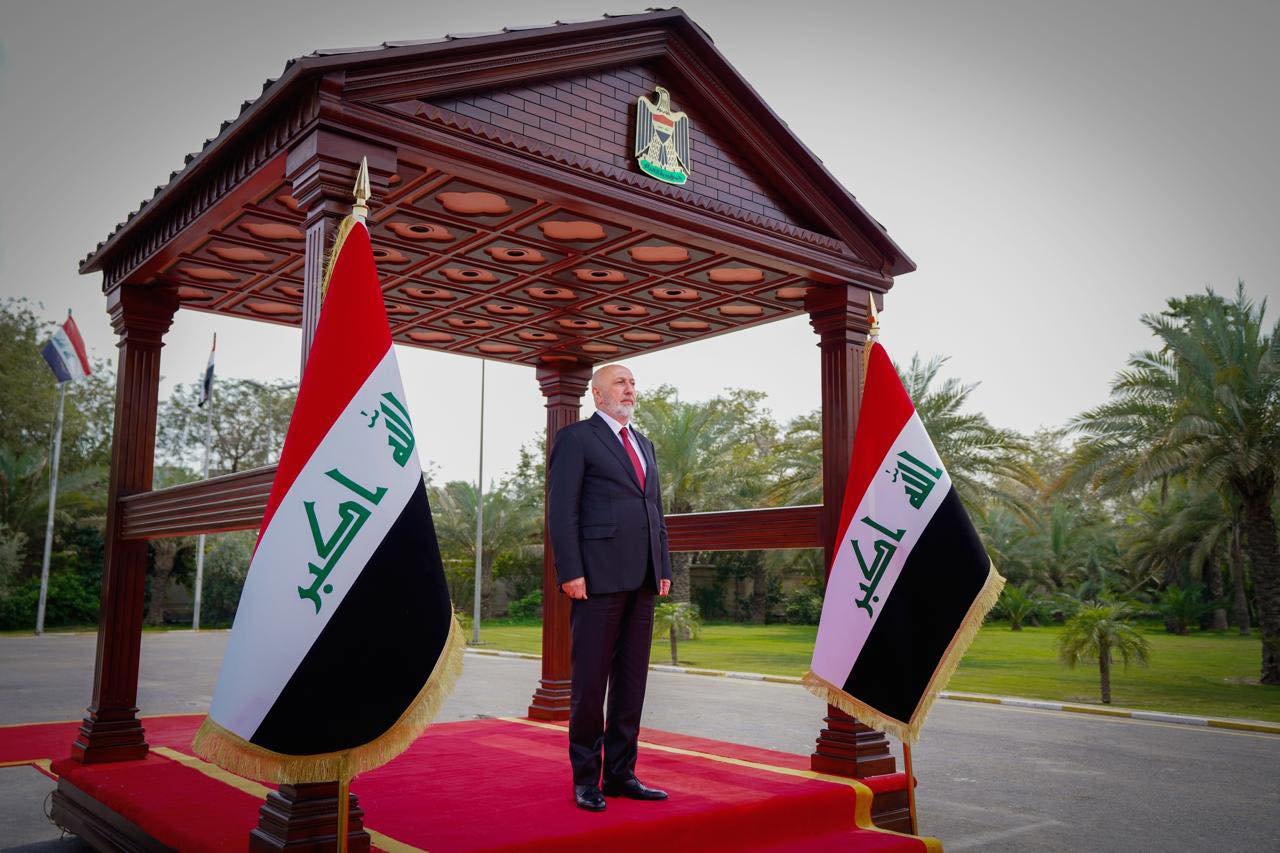
On April 11, 2026, the Iraqi parliament elected Nizar Amedi, a PUK figure from Duhok, as the new president of the republic. Amedi won 227 votes in the second round. His rival Fuad Hussein, the KDP’s candidate and until that day Iraq’s foreign minister, was knocked out in the first round with just 16 votes. The KDP boycotted the session. However, the boycott did not prevent the session from pressing ahead. Parliament needed 220 members to meet the constitutional two-thirds quorum, and 252 attended.
Context: The story of who attended and who stayed away tells a lot about how isolated the KDP had become by the time the chamber met. Beyond the KDP itself, only two Shia factions formally boycotted. One was the thirteen-member Dawa core of Nouri al-Maliki’s State of Law. The other was the six-seat Huquq bloc of Kataib Hezbollah. Even inside Maliki’s own State of Law, the twelve-seat Nahij al-Watani bloc of the Fadhila party and the five-seat Muntasirun of Abu Ala al-Walaii broke ranks and attended. The Sunni field, which the KDP had spent months cultivating in the hope of building a cross-sectarian blocking front, attended almost wholesale. Taqaddum came. Even figures the KDP would have expected to lean its way, like Siyada of Khamis al-Khanjar and Azm of Muthanna al-Samaraii, walked into the chamber. Beyond those formal factional boycotts, only around twenty other MPs did not, and they did so as individual absences, not as a coordinated signal.
When the breakdown is converted into attendance rates, the isolation becomes sharper. Roughly 89 percent of Sunni MPs, measured against the seats of the Sunni National Council, attended. About 79 percent of Shia MPs did the same. And even among Kurds, where the KDP was supposed to have the real say, more than half attended, at a rate of 54 percent, meaning that effectively every Kurdish faction outside the KDP walked into the chamber. That last figure is the story, because one of the KDP’s central objections to this session had never actually been about the post going to the PUK as such. It was about the mechanism. The KDP’s argument was that the 56 Kurdish seats won in the federal election should decide the Kurdish candidate collectively, among themselves, before anything went to parliament. But the fact that 30 of those 56 MPs chose to attend, against 26 who boycotted, means a majority of Kurdish MPs rejected that framing and endorsed the mechanism of letting the chamber decide.
Analysis: This was not an isolated parliamentary setback. It was the latest instance of a longer strategic drift, in which the KDP has repeatedly misread where actual power in Baghdad sits and has failed to convert its electoral weight into coalition outcomes. The presidential session made that drift visible in a way the party can no longer deny.
That distinction matters. Electoral success is not the same as political success, and political success is not the same as strategic success. Electoral success is winning seats. Political success is turning those seats into alliances. Strategic success is identifying where real power sits, and making sure you are inside that coalition when the system reaches a point of decision. The KDP still has electoral weight. What it increasingly lacks in Baghdad is coalition conversion.
The 2022 parallel is instructive. The KDP at that point had joined a tripartite alliance with Muqtada al-Sadr and Mohammed al-Halbousi, a project aimed at forming a majoritarian government and breaking out of the consensus model that had governed post-2003 Iraq. The alliance failed because the camp on the other side, anchored by the Coordination Framework and including Nouri al-Maliki, was able to deny the two-thirds presidential quorum needed to move the process forward. That is what killed the Sadrist project, and it is what eventually pushed Muqtada al-Sadr out of politics altogether. Halbousi, who now leads by far the largest Sunni bloc, has since become an adversary of the KDP, after the KDP joined Maliki in vetoing his return to the speakership, a dispute that has hardened into open rivalry. The PUK, importantly, was on that winning side. It aligned with the bloc that actually had the institutional numbers and the political center of gravity, and it benefited from that judgment when the dust settled. It has also since become a close ally of Taqaddum within the Sunni field.
In 2026, the KDP walked into a presidential session again convinced it could shape it. This time it tried the same instrument that had defeated the 2022 tripartite project, a boycott built around the two-thirds threshold. However, it built that boycott on an alliance with Maliki, treating him as though he were still the anchor of the camp that had won in 2022. He was no longer that anchor. The winning 2022 camp had always been much broader than Maliki, and in the years since, the center of gravity inside the Shia field has moved significantly. The effective decision-makers today, the ones who actually form coalitions and deliver votes, are a newer cluster: Mohammed Shia al-Sudani, Qais al-Khazali, and Ammar al-Hakim, who are increasingly aligned with Halbousi on the Sunni side, Bafel Talabani on the Kurdish side, and Faiq Zidan as the institutional backstop. Maliki remains a figure, but he is no longer the axis around which the decisive Shia coalition is built, partly because the younger Shia leaders have outmaneuvered him politically, and partly because the Shia figures still closest to him hold much smaller shares of parliament. Humam Hamoudi of Abshir Ya Iraq, for instance, holds 2 core seats, and Asas of Muhsin al-Mandalawi holds 8, while Sudani commands 46, Khazali 29, and Hakim 18. Maliki has even lost his grip on his traditional State of Law allies, such as the Fadhila party, which had sat inside his coalition for more than a decade.
This pattern is not confined to one presidential vote. In the disputed territories, the same dynamic has been playing out for years. The PUK could not secure the Kirkuk governorship while it was nominally allied with the KDP, because the KDP kept blocking it. In 2024, the PUK entered into an alliance with the Sunni Arab Taqaddum of al-Halbousi and took the governorship within months. In Nineveh, the PUK has moved in the same direction, entering joint arrangements with Arab forces rather than insisting on a purely Kurdish lane, and has more than doubled its seat count in recent provincial cycles at the KDP’s direct expense. The PUK is not winning these contests because it has become bigger than the KDP. It is winning them because it has become better at the only instrument that produces outcomes in a fragmented Iraqi system.
There was also a more immediate warning the KDP chose to ignore. In the days before the presidential vote, parliament had rejected the KDP’s candidate for second deputy speaker, Shakhawan Abdullah. The post was eventually filled by Farhad Atrushi, also a KDP member, but only because Faiq Zidan engineered a legal workaround that allowed the Shia blocs to vote him in and preserve the party’s power share in Baghdad. The message Zidan reportedly conveyed to the KDP afterward was direct: the law had been bent once to protect their share, and the party should not expect the same accommodation when it came to the presidency. Yet the KDP proceeded as if no such warning had been delivered.
There is a generational dimension to this too, and it is worth naming plainly. The cluster now driving decisions in Baghdad, Talabani, Sudani, Khazali, Hakim, Halbousi, all sit in a rough late-forties to mid-fifties band. Masoud Barzani, born in 1946, and Nouri al-Maliki, born in 1950, are from a different political age. This does not reduce the story to biology. But it does mean that the networks, instincts, and relationships through which Barzani has historically operated are not the networks now running the chamber. The political culture around him has turned over, and the KDP has not turned over with it.
Part of the problem is also more practical and personal than ideological. Bafel Talabani goes to Baghdad. He meets people himself. He talks, listens, and builds the personal familiarity that Iraqi politics still runs on. Barzani rarely operates that way. He works through distance, hierarchy, and intermediaries. That style can preserve authority at home, but it is much less reliable in a capital where politics is still intensely personal and where filtered information can become a strategic trap. This is why, while in the abstract the KDP was not weak, it lost the April 11 contest: its reading of who would stand with it turned out to be badly wrong. There is also an element of ego that plays a significant role here. Barzani sees himself as larger than this new generation of Iraqi leaders, but they refuse to accept that hierarchy, accuse him of arrogance, and view his partners as subordinates rather than peers.
The same structural weakness is visible at home. The Kurdistan Region has now gone more than eighteen months without a new cabinet, despite the KDP’s victory in the October 2024 regional election, because the party has been unable to reach a deal with the PUK and smaller parties even while holding the stronger hand. This shows that the KDP’s problem is structural. It has struggled to convert electoral success into alliances and political gains not only in Baghdad, but across the board.
There is also the accumulated political baggage the KDP brings into any interaction with Baghdad. Since the 2017 referendum, Iraqi actors have tended to view the party through a lens of mistrust, treating it less as just another federal partner and more as the carrier of a lingering separatist project. The 2022 tripartite gambit reinforced that reading in Shia political circles, which saw it as an attempt to break the Coordination Framework from the outside. That perception has persisted despite some KDP efforts to soften it. A month ago, when Baghdad demanded that the Kurdistan Region market its oil through the Region’s own pipelines, the KRG, under KDP leadership, rejected the request and within hours presented Baghdad with a list of conditions. That only deepened Iraqi concerns and once again made the KDP appear confrontational and retaliatory.
There is another layer here, and it matters because Amedi’s rise can be felt, in part of the Kurdish political imagination, as a symbolic intrusion into the KDP’s own historical and social space. The KDP’s senior leadership is overwhelmingly Bahdinani. Masoud Barzani is Bahdinani, and the party’s deep base, security architecture, and symbolic heartland all lie in Duhok and the surrounding mountain districts. The PUK, by contrast, has historically been more Sorani, rooted in Sulaimani and the plains and cities around it. These distinctions are not decorative, nor can they be safely minimized. During the Kurdish civil war in the 1990s, many in Duhok explicitly understood the conflict in those terms. Those reflexes have softened over time, but they have not disappeared, and elites on both sides know that.
That is what makes Nizar Amedi’s ascent especially noteworthy. He is from Amedi district, adjacent to the Barzan area that forms the Barzani family’s heartland. He is Bahdinani, yet he is also a PUK figure who has now become president of Iraq. That is not a routine outcome in Kurdish politics. It means that this rise is not being read as influence extending outward from Sulaimani, but as something moving upward through the KDP’s own symbolic terrain. For the Barzanis, whose authority has long rested in part on the idea that Bahdinan is their sphere, a Bahdinani PUK president is not just another federal seat lost. It is, at least symbolically, a breach inside the party’s own house.
The KDP remains the dominant force in Erbil and Duhok, but the more accurate description of where the KDP now sits is that it remains powerful where it commands and is visibly weakening where it has to negotiate. In the Kurdistan Region it commands, so it still dominates. In Baghdad it has to negotiate, and negotiation is precisely the instrument the party’s current leadership is least equipped to use.


