


Explainer: What is Iraq’s Federal Council that Barzani is pushing to create?
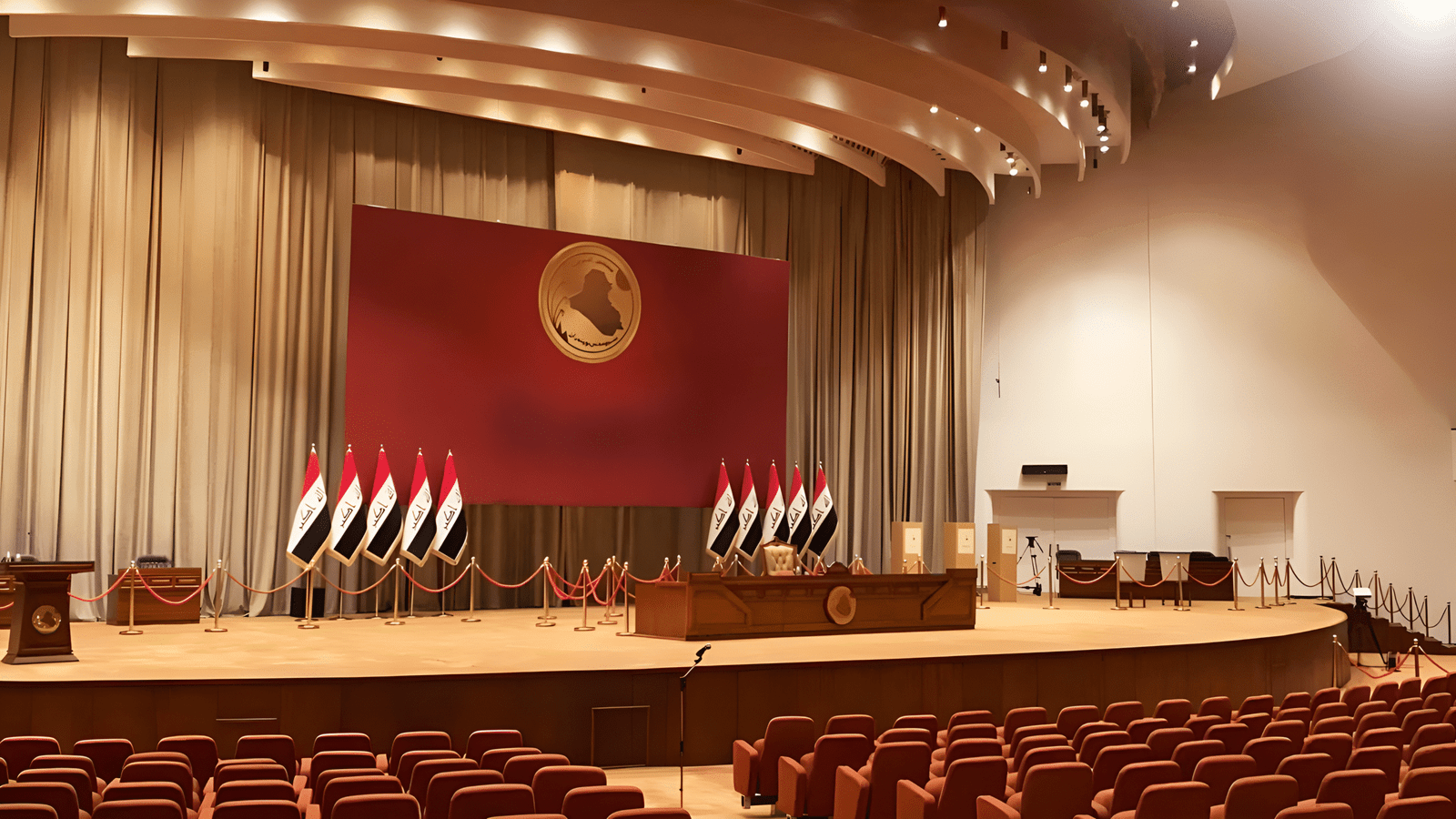
KDP leader Masoud Barzani has said that one of their key demands in any new Iraqi government-formation deal is the creation of Iraq’s Federal Council. This body is mandated by the 2005 constitution but has never been established. It is intended to serve as the upper chamber in a bicameral parliament, alongside the Council of Representatives.
The idea behind the Federal Council is to balance population-based representation in the lower house with territorial or region-based representation in the upper house. In practice, it is meant to protect federal regions such as the Kurdistan Region and to provide a forum for settling disputes between Baghdad, regions, and provinces.
The Council has not been formed because the constitution left its structure to a later law that required a two-thirds vote in parliament. Successive parliaments failed to pass that law. Deadlock has centered on the Council’s composition and powers, including whether seats should be distributed equally by governorate or weighted by population, whether the chamber should have real veto or blocking authority, and broader Kurdish-Arab and federalist-centralist disagreements. Many dominant blocs also have little incentive to create a strong second chamber that could limit the current parliament’s freedom of action. A draft law finally reached parliament for a first reading in February 2025, but by late 2025 it still had not produced a functioning council. Barzani wants the new parliament to finalize this law and activate the chamber.
The most sensitive part of the draft is seat allocation. The February 2025 proposal assigns two representatives to every governorate and four to Baghdad. But the deeper argument is about how regions should be represented. Legal reviewers have long suggested alternatives such as keeping governorate seats while adding a fixed number of seats for each region, or giving regions their own separate delegations. The choice matters because it determines whether the Council truly reflects Iraq’s federal structure or simply mirrors provincial representation.
Iraq’s Federal Council
Constitutional upper chamber (mandated in 2005, never established) designed to balance the population-based lower house with territorial representation. Intended to protect regions like Kurdistan and to mediate Baghdad–region disputes.
Seat Allocation Proposals
Kurdish Impact Assessment
✓ Potential benefits
- About 20% of seats (higher than current CoR share)
- Stronger blocking and bargaining power
- Extra protection against majority rule
- Halabja governorate boosts Kurdish weight
✗ Key risks
- KDP–PUK splits could neutralize the advantage
- New Arab governorates would dilute Kurdish share
- Draft still lacks region-as-region bloc voting
- Big provincial parties may capture the chamber
Status: Draft reached first reading in Feb 2025, but remains non-functional by late 2025. Barzani is demanding its finalization as a condition for government formation.
Halabja’s upgrade to governorate status adds another layer. Under a pure “two seats per governorate” formula, the Kurdistan Region would hold roughly 20 percent of the Council. That is higher than the Kurds’ share in today’s Council of Representatives, so it would raise Kurdish bargaining and potential blocking power in the legislative process, provided Halabja is fully counted and no transitional exceptions are introduced. Kurdish leaders originally pushed for an upper chamber precisely to prevent a population-weighted lower house from centralizing power unilaterally. In that sense, the Federal Council was conceived as a second institutional shield, alongside federalism itself, against domination by Iraq’s Arab majority.
That advantage, however, is not automatic. The current draft represents provinces, not regions, and does not grant the Kurdistan Region a single bloc vote or extra seats simply because it is a region. Kurdish leverage would therefore depend on Kurdish unity inside the chamber. If KDP and PUK carry their existing rivalries into the Federal Council, Baghdad could still split Kurdish votes and neutralize the upper house’s protective role. In that scenario, the Council becomes another arena for intra-Kurdish competition rather than a collective safeguard.
There are also longer-term risks. If major Arab blocs use their parliamentary majority to create additional governorates, or coordinate new governorates across Shiite and Sunni areas, the Council’s size expands in a way that benefits them and steadily dilutes the Kurdish share. Over time, this could reduce the distinct structural advantage the Kurds gain from territorial over-representation.
Finally, even a territorially weighted chamber can be captured by the same dominant parties that run provincial politics. If Coordination Framework-aligned forces or other major blocs control most Arab governorates, the Federal Council could end up reinforcing the status quo instead of checking it.
In short, the Federal Council is a constitutionally mandated upper house designed to protect territorial and regional interests. It would likely strengthen Kurdish leverage on paper, especially after Halabja’s governorate recognition, but its real value would hinge on the final design of region representation and on whether Kurdish parties can act together once the chamber exists.


