


Mazloum Abdi’s European tour and the limits of European influence
SDF commander Mazloum Abdi recently visited several European countries, including Italy and France. In Paris, he held meetings with French officials to discuss developments in Syria and the continuing integration process between the SDF and Damascus.
The tour caused controversy in pro-government Syrian media. Some outlets cited Syrian diplomatic sources as saying that Abdi had travelled without prior consultation with or approval from Damascus, describing the visit as a violation of the integration agreement.
That characterisation is inaccurate and misleading. The SDF has not been formally dissolved, and Abdi remains its commander during the transitional integration period. Damascus continues to deal with him in that capacity, with Syrian officials and government-linked media still referring to him by that title. His foreign travel therefore does not clearly violate the agreement. The SDF and its civilian institutions continue to exist while their gradual incorporation into Syrian state structures proceeds, and Abdi retains a distinct political and military position throughout.
The greater exaggeration has come from parts of the Syrian Kurdish media, where the European tour has been presented as a major diplomatic breakthrough and, in some cases, as potentially transformative for the negotiations with Damascus.
The visits carry symbolic importance. They demonstrate that Abdi continues to receive international recognition as a representative of a substantial portion of Syria’s Kurdish population, and they help the SDF leadership preserve diplomatic access as its territorial and institutional position contracts.
European engagement may produce limited influence over questions such as Kurdish political representation, the treatment of former SDF personnel, local administration, appointments, cultural rights and the sequencing of institutional transfers. But the strategic framework has already been established. The remaining SDF military, security and administrative structures are being integrated into the Syrian state. The main disputes now concern the terms, pace and institutional residue of that process.
France lacks the physical leverage required to alter this trajectory. It has no military presence protecting the remaining SDF-held areas, no secure supply route into them, and no capacity to deter sustained pressure from Damascus or Turkey. The United States has also withdrawn its forces from Syria. Washington retains significant diplomatic, economic and political tools, including sanctions, international financial leverage, relations with Gulf states and influence through Congress, but its ability to supervise developments on the ground has declined sharply.
The Syrian government, Turkey, the United States and the SDF itself remain the principal actors capable of shaping the outcome. Other states retain varying degrees of diplomatic and economic influence, though none commands leverage comparable to these actors in northern Syria.
Turkey holds the strongest immediate external position. Northern Syria lies directly along its border and implicates what Ankara defines as a core national-security interest. Turkey has geographic proximity, intelligence penetration, local networks, military reach and a far greater willingness to intervene than any European state.
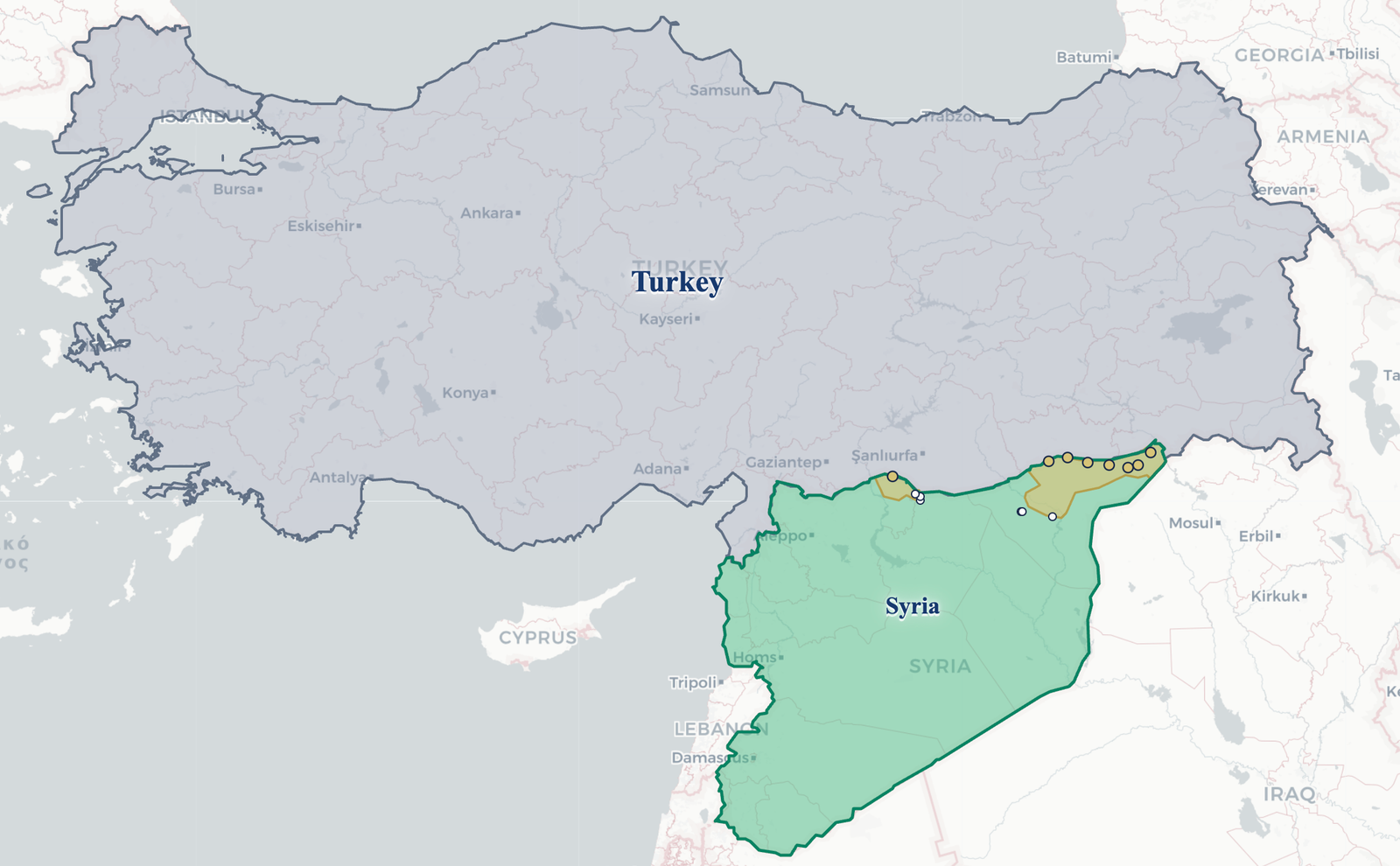
The remaining SDF-held area is small, exposed and demographically mixed. Most Kurdish-majority cities under SDF control lie close to the Turkish border. Hasakah is farther south, but its mixed population and heavily Arab surroundings create additional vulnerabilities. This environment offers numerous points of entry for intelligence penetration. Turkey and Damascus can recruit Arabs or Kurds, former SDF personnel, political opponents, individuals excluded from existing patronage networks, and people motivated by money, pressure or personal grievances. A relatively small network of informants, defectors, saboteurs and local intermediaries could disrupt roads, facilities and command structures, intensify internal suspicion, encourage defections and force the SDF to divert resources towards internal security. They do not require broad social support to achieve this.
Turkey can also apply surveillance, selective drone strikes, economic pressure, border restrictions and demands for the removal of commanders it considers linked to the PKK. These tools can erode the cohesion of the remaining SDF structure without triggering the political costs of a full military offensive.
Israel has established a significant presence in southern Syria since the collapse of the Assad government, occupying additional territory and maintaining active military operations in the country’s south. Its influence does not extend meaningfully into the north. In the areas where the SDF’s future is being decided, Israel has no military presence, no local networks of comparable depth and no defined security interest that would motivate sustained engagement. Whatever leverage Jerusalem exercises over Damascus relates primarily to southern Syria and to its broader campaign against Iranian entrenchment. It has neither the reach nor the incentive to shape the terms of SDF integration. In northern Syria, Israeli influence is wholly overshadowed by Turkey’s, which operates from geographic proximity, entrenched intelligence networks and a longstanding institutional commitment to containing Kurdish political and military autonomy along its border.
Any durable SDF role in Syria will therefore require some form of accommodation with Turkey. European recognition and continued relations with Washington may improve the SDF’s position at the margins, but they cannot compensate for sustained Turkish hostility.
The SDF still retains agency. Its internal cohesion, negotiating strategy, political manoeuvring and capacity to exploit divisions among its opponents will shape the pace and final form of integration. The prolonged process also leaves room for regional developments to alter the balance. Growing discussion of possible US pressure on Damascus to move against Hezbollah in Lebanon could place further strain on Ahmed al-Sharaa’s still-consolidating government. A wider confrontation or internal crisis could distract Damascus, weaken its centralising momentum and allow the SDF to recover some negotiating leverage, preserving elements of de facto autonomy through locally concentrated security forces, administrative continuity, political representation and influence over implementation. Whether that materialises will depend on disciplined leadership, internal cohesion and a more effective political strategy than Damascus can easily contain.
The future of the remaining SDF-held areas will be shaped by Damascus’s centralisation strategy, Turkey’s security demands, Washington’s willingness to impose costs on overt coercion, the SDF’s own capacity to manoeuvre and the wider regional environment. France can influence some details within the space created by these actors. It cannot independently determine or protect that space.
Abdi’s European tour is symbolically significant and may produce marginal gains over the terms and pace of integration. Its impact on the strategic direction of the process will be very limited. The outcome remains open to disruption and regional change, though the overall balance continues to favour integration under Damascus.


